


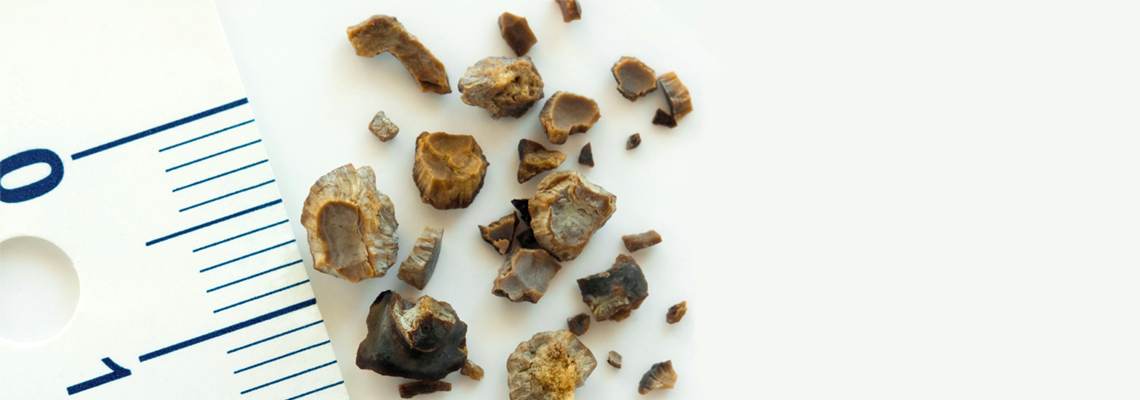
Types Of Kidney Stones
Nearly 12% of the world's population is affected by kidney stone disease.
Kidney stones are a mass of crystals formed in the kidney and found in the urinary tract comprising of the kidneys, urinary bladder, urethra, and ureters. Also called "renal calculi", these Kidney stones may be formed due to diet, lifestyle habits and environmental or genetic factors. Whatever the case may be, the patient must immediately consult an expert kidney stone doctor on experiencing kidney stones symptoms. If not, this nephrolithiasis or kidney stone disease may lead to total renal failure or loss of the kidneys.
Types of Kidney Stones
Kidney stones are of the following types
- Calcium Oxalate Stones
These are the most common type of kidney stones constituting 80% of the type of kidney stones. They are formed when the urine contains a high level of calcium, oxalate or uric acid. Low level of citrate too causes these types of kidney stones. Calcium oxalate stones are formed due to the high consumption of food rich in oxalates like beets, spinach, potatoes, nuts, black tea, and chocolate.
- Calcium Phosphate Stones
Calcium phosphate stones are usually formed when there is some abnormality or malfunctioning of the urinary system. It occurs in the case of renal tubular acidosis. Calcium phosphate stones may also be formed due to intake of seizure medicines like Topiramate. These stones may be accompanied by migraine.
- Uric Acid Stones
Uric Acid stones are formed when the urine is highly acidic. If a person does not drink enough water or loses much fluid from the body due to some illness, he has a risk of the formation of these stones. People who have gout or who undergo chemotherapy for cancer may suffer from Uric Acid stones. A high intake of animal protein or purines in the diet may result in the formation of Uric Acid stones. People who consume shellfish and other seafood or meat in excess level are prone to the formation of these stones. Uric Acid stones are formed most commonly in men and constitute 3-10% of the types of kidney stones.
- Struvite Stones
Struvite stones are formed most commonly in women and constitute 10-15% of the types of kidney stones. They are also called triple phosphate stones as they are formed from Magnesium Ammonium Phosphate They result from a kidney or urinary tract infection and are hence also called as infection stones. These stones grow quickly and may even occupy the entire kidney if left unnoticed. These stones require immediate consultation with a kidney stone doctor as they may lead to renal failure.
- Cystine Stones
Cystine stones are formed due to a genetic disorder called cystinuria in both men and women. These are formed when excess amino acid called cystine is leaked into the urine forming the in the urinary tract. Cystine stones are rare and comprise of only 2% of the nephrolithiasis complaints.
Treatment Options for Kidney Stones
On encountering kidney stones symptoms, the first thing to do is to consult an expert kidney stone doctor. The kidney stone doctor may suggest any one of the following treatment options for kidney stones
- ESWL- Extracorporeal Shock Wave Lithotripsy
In ESWL, shock waves are passed to bombard the kidney stones and break them into pieces with their vibration. This procedure lasts for 45-60 min and is done under mild anesthesia to relieve pain. Moderate discomfort with bleeding is caused when the stones break and their fragments pass through the urinary tract.
- Percutaneous Nephrolithotomy - Kidney Stone Surgery
Here, a small incision is made at the back and telescopes are inserted to remove the kidney stone effectively. This procedure is done under general anesthesia and requires 2 days of hospitalization.
- Scope Treatment for Small Stones
When the kidney stones are small, the kidney stone doctor sends a ureteroscope equipped with a camera into the urinary bladder or ureter. Then, he inserts minute instruments and ensnares the stone to remove it. This procedure uses general or local anesthesia and a stent is used here to remove the swelling.
- Parathyroid Gland Surgery
Calcium phosphate stones are usually formed due to overactive parathyroid glands. The kidney stone doctor may remove the growth of the parathyroid glands to prevent the recurrence of the stones.
Kidney stone disease can be easily treated if diagnosed correctly by a skilled kidney stone doctor with expertise and experience in nephrolithiasis treatment.


